Tree felling removes the visible trunk and crown, but it does not normally remove the stump and main root structure below ground. Once the tree has gone, the remaining stump can easily be overlooked, particularly if it sits close to the edge of a garden. However, it can continue to affect how the surrounding space looks, functions and can be used in the future.
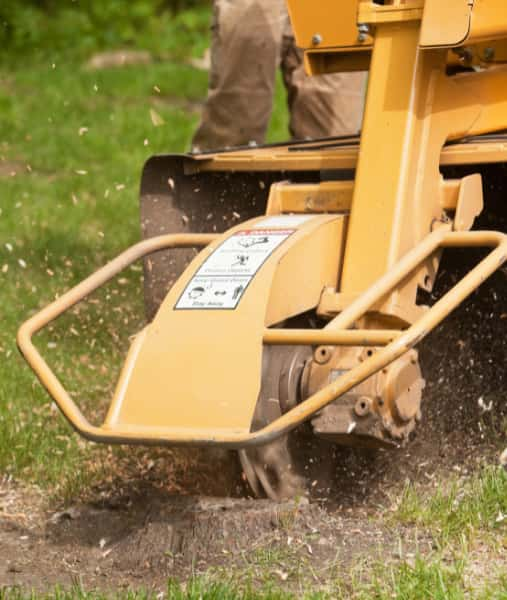
For property owners in Horley, Surrey, stump grinding provides a practical way to deal with this remaining part of a felled tree. Rather than attempting to extract the complete root system, specialist equipment reduces the stump and accessible surface roots into smaller material below the immediate ground area. Whether stump grinding is needed depends on the position of the stump and what is planned for the space afterwards.
What Are the Benefits of Stump Grinding After Tree Removal?
The main purpose of stump grinding is to remove the obstruction left behind after a tree has been felled. This can make the area easier to maintain, improve its appearance and create more practical options for future garden use.
Not every stump necessarily causes an immediate problem. However, where it occupies useful space, interferes with mowing, sits within a path or prevents planned landscaping, dealing with it soon after tree removal can provide a cleaner and more manageable result.
Tree Felling and Stump Removal Are Separate Processes
It is useful to understand what happens when a tree is felled.
The trunk is normally cut relatively close to ground level, but the stump remains connected to the root system beneath the soil.
Removing this remaining structure requires a separate operation.
Stump grinding is specifically designed to reduce the stump without requiring the complete network of roots to be excavated from the surrounding garden.
A Stump Can Remain for a Long Time
Once a tree has been removed, its stump does not necessarily disappear quickly.
Large established trees can leave substantial woody structures containing dense material.
Natural deterioration can take considerable time and may occur unevenly.
If the stump occupies an inconvenient position, simply waiting for it to break down may leave an unwanted obstruction in the garden for much longer than anticipated.
Stump Grinding Can Create a Cleaner Finish
A remaining stump can make tree removal feel incomplete.
The crown and trunk may be gone, but the base of the tree remains clearly visible within the garden.
Grinding reduces this prominent feature and allows the area to be finished more neatly.
This can be particularly useful where the tree previously occupied a central or highly visible part of the outdoor space.
Useful Garden Space Can Be Recovered
The base of a mature tree can occupy a surprisingly large area.
Even after felling, the stump can prevent that section of the garden from being used effectively.
Grinding it down can release the immediate surface area for alternative use.
Depending on future plans, the space may be incorporated into lawn, planting or another part of the garden layout.
Stumps Can Interfere With Lawn Maintenance
A stump positioned within a lawn can make routine maintenance unnecessarily awkward.
Mowing requires repeated manoeuvring around the obstruction, while exposed roots may create additional uneven areas nearby.
Grinding the stump can simplify the immediate surface and make the lawn easier to manage.
Where substantial surface roots are also present, these can be assessed as part of the work.
Exposed Surface Roots Can Extend Beyond the Stump
The stump itself is not always the only visible remnant of the tree.
Mature trees can have large roots extending across or close to the ground surface.
After felling, these roots may remain noticeable around the stump.
Professional stump grinding can assess which accessible surface roots need attention according to the intended use of the area.
A Stump Can Restrict Future Landscaping
Tree removal often forms part of a wider change to a garden.
The area may be intended for new planting, lawn improvements or a revised garden layout.
Leaving a substantial stump in place can limit these options.
Grinding can provide a more practical starting point by reducing the main obstruction before other landscaping work begins.
Stump Grinding Can Make Lawn Reinstatement Easier
Where the intention is to return the area to lawn, leaving the stump at ground level can make this difficult.
The remaining wood occupies the exact space where a more consistent surface is wanted.
Grinding below the immediate surface allows the area to be prepared more effectively.
Further ground preparation may still be needed depending on the stump, roots and surrounding soil, but removing the main woody obstruction is an important first stage.
New Planting Needs Appropriate Preparation
A property owner may want to introduce new planting where a tree previously stood.
Stump grinding can help create more usable space, but it is important to recognise that the original tree’s root system does not disappear completely.
The grinding process concentrates on the stump and accessible roots rather than excavating every root from the ground.
Future planting should therefore be planned around the actual condition of the area after grinding.
Grinding Is Different From Complete Root Excavation
One common misconception is that stump grinding removes the entire root system.
It generally does not.
The stump is mechanically reduced, together with suitable accessible roots where necessary, while much of the deeper and more distant root network remains below ground.
These remaining roots can gradually break down naturally.
This makes stump grinding a considerably different process from attempting to excavate the complete underground structure of a mature tree.
Complete Root Removal Is Often Unnecessary
Tree root systems can extend well beyond the visible stump.
Attempting to remove every root would involve disturbing a much larger area of ground.
For many ordinary garden situations, this is unnecessary.
If the objective is simply to remove the visible stump and make the immediate area more usable, grinding can provide a focused solution without attempting to extract the entire historic root system.
Stump Size Influences the Work Required
Not all tree stumps are alike.
A small tree may leave a relatively compact stump, while a mature tree can leave a broad base with substantial roots extending from it.
The diameter, height and structure of the stump all influence how grinding is approached.
Professional assessment helps determine the equipment and working method appropriate to the individual stump.
Stump Position Is Equally Important
A stump in the middle of an open lawn presents different practical considerations from one close to a boundary, planting area or other garden feature.
Access to the stump also matters.
The route through the garden, surrounding space and nearby features all need to be considered before work begins.
This is one reason professional stump grinding should be planned according to the individual site rather than treating every stump in the same way.
Several Stumps Can Make a Garden Difficult to Use
Where multiple trees have been removed over time, a garden can contain several remaining stumps.
Individually, each one may appear relatively minor.
Together, they can significantly affect mowing, planting and general use of the outdoor area.
Grinding several stumps can help consolidate the space and create a more consistent garden surface.
Old Stumps Can Become Difficult to See
As grass and surrounding plants grow, smaller or lower stumps can become partially hidden.
The stump may still project sufficiently above the surrounding ground to remain an obstruction even though it is no longer immediately obvious.
This can make the area awkward to maintain.
Grinding removes the remaining prominent woody structure rather than allowing it to become concealed by vegetation.
A Stump Can Affect the Appearance of a Newly Cleared Area
Tree removal can dramatically open up a garden.
More space becomes visible and the overall layout may feel substantially different.
A large stump remaining in the centre of that newly opened area can become particularly noticeable.
Grinding provides a more finished appearance and allows attention to move towards how the newly available space will be used.
Some Tree Stumps Can Produce Regrowth
Depending on the tree, new shoots can sometimes emerge from the stump or remaining root structure after felling.
This can be frustrating where the purpose of removing the tree was to clear the area.
Grinding the stump can help manage the main source of visible regrowth around the original base.
The response varies according to the tree, which is why the particular stump should be considered individually.
Repeatedly Cutting New Shoots Does Not Remove the Stump
Where a stump produces new growth, repeatedly cutting the shoots only deals with what is visible above ground at that time.
The stump itself remains.
If the objective is to clear the area rather than manage continuing regrowth, stump grinding can provide a more comprehensive approach to the remaining base.
Professional assessment can determine how the particular stump should be treated.
Decaying Stumps Can Become Uneven
As a stump naturally deteriorates, it does not always break down uniformly.
Some sections can remain hard while others become softer or begin collapsing.
This can leave an irregular area at ground level.
If the eventual intention is to reclaim the space, planned stump grinding can be more practical than waiting for unpredictable natural deterioration.
Stump Grinding Can Help Before Garden Redesign
Where a garden is being reorganised following tree removal, dealing with the stump early can make subsequent planning easier.
The true amount of usable surface space becomes clearer once the obstruction has been reduced.
Paths, lawns and planting areas can then be considered around the revised garden layout rather than having to accommodate the remaining stump.
Removing a Stump Can Improve Access
A stump near a frequently used route can reduce available clearance.
This can be particularly noticeable where a tree previously grew beside a path or narrow section of garden.
Once the tree is felled, the remaining stump may continue projecting into the usable route.
Grinding it can help reclaim the immediate area and create a clearer surface.
Stumps Can Complicate Routine Garden Work
Gardening around a stump can require unnecessary effort.
Mowers, wheelbarrows and ordinary garden equipment need to be manoeuvred around it, while planting and ground preparation can be restricted.
The inconvenience may be minor initially but becomes more noticeable when the surrounding area is used regularly.
Grinding can simplify the space and make future maintenance more straightforward.
Stump Grinding Can Complement Tree Felling
Tree felling and stump grinding serve different purposes but can work together as part of a complete tree removal project.
Felling deals with the standing tree.
Grinding addresses what remains at ground level afterwards.
Where the intention is to clear the area rather than simply remove the crown and trunk, considering both stages can produce a more complete result.
Stump Grinding Does Not Mean Every Root Disappears
It is important to have realistic expectations about the finished area.
Large roots can remain beneath the surrounding ground after grinding.
Over time, these roots can naturally deteriorate.
The immediate objective is to reduce the stump and relevant accessible surface roots sufficiently for the planned use of the space, rather than attempting to remove every trace of the former tree.
The Required Grinding Depth Depends on the Intended Result
How the area will be used afterwards can influence how the stump is approached.
A stump being removed simply because it is visually unwanted may have different requirements from one located within an area intended for lawn or other garden changes.
Discussing the intended outcome before grinding allows the work to be planned accordingly.
This helps ensure that the stump is dealt with in a way that supports the next stage of the garden.
Stump Grindings Need to Be Considered Afterwards
The grinding process produces a mixture of small wood particles and surrounding material.
What happens with this material depends on the stump and intended finish.
The area may require further preparation before it is incorporated into the surrounding garden.
Stump grinding should therefore be viewed as removing the main obstruction rather than automatically completing every aspect of subsequent landscaping.
Ground Levels May Need Further Attention
A large tree can influence the ground around its base for many years.
After the tree and stump are removed, the area may not immediately match surrounding ground levels.
Grinding creates the opportunity to prepare the space, but further work may be required depending on the desired finish.
This is particularly relevant when a smooth lawn or clearly defined garden area is planned.
Stump Grinding Can Be Useful Before Establishing a New Garden Layout
Once a large tree has been removed, property owners often reconsider how the surrounding area is arranged.
A previously shaded or inaccessible section may suddenly become much more usable.
Removing the stump allows this space to be assessed without the original tree base dictating the layout.
This provides greater flexibility when deciding how the garden should develop.
Not Every Stump Needs Immediate Removal
There are circumstances where a stump may not cause any meaningful inconvenience.
If it is positioned in an unused part of the garden and there are no plans to change the area, immediate grinding may not be necessary.
Professional tree surgery should be based on practical need rather than carrying out additional work automatically.
The value of stump grinding becomes greatest when the remaining stump interferes with how the area is intended to function.
When Is Stump Grinding Particularly Worth Considering?
Stump grinding may be useful when:
- the stump is positioned within a lawn;
- mowing around it has become inconvenient;
- exposed roots are affecting the immediate surface;
- the area is intended for future landscaping;
- the stump restricts a path or useful garden space;
- several old stumps remain after previous tree removal;
- new shoots continue appearing around the old tree base;
- the stump has become an unwanted visual feature;
- the garden is being redesigned after tree felling;
- the remaining stump prevents the area from being used as intended.
The appropriate approach depends on the stump itself and what the property owner wants to achieve afterwards.
Why Leaving the Stump Until Later Can Be Inconvenient
There is nothing inherently wrong with deciding to deal with a stump separately from the original tree felling.
However, if future garden work is already planned, postponing grinding can mean working around the stump unnecessarily.
New landscaping may then have to be altered when the stump is eventually removed.
Considering the final use of the area from the beginning can make the overall process more straightforward.
Stump Grinding Should Be Planned Around the Site
Specialist stump grinding equipment needs suitable access to the work area.
The stump’s location, diameter and surrounding features therefore matter.
A stump in an open section of garden may be relatively straightforward to approach, while one in a more restricted position requires greater planning.
Professional assessment allows these practical factors to be considered before work begins.
Professional Equipment Makes a Significant Difference
Tree stumps are dense, established structures designed to support the weight of mature trees.
Attempting to remove one using ordinary garden equipment can quickly become difficult, particularly where the stump is large or has substantial surface roots.
Stump grinders are specifically designed to reduce this woody material progressively.
Professional operation also allows the work to be matched to the size, position and accessibility of the stump.
Stump Grinding Is a Focused Form of Tree Work
The purpose of stump grinding is not to disturb more of the garden than necessary.
The work concentrates on the remaining tree base and relevant accessible roots.
This makes it a practical follow-on service where the standing tree has already been removed but the property owner wants to reclaim the immediate area.
The amount of work can be tailored to the stump and intended outcome.
Future Plans Should Be Discussed Before Grinding
Knowing what will happen to the area afterwards can help determine the most appropriate approach.
If the objective is simply to remove an obvious stump from view, the requirements may be relatively straightforward.
If the area is being prepared for lawn, planting or wider landscaping, the intended finish should be considered before the work starts.
This allows stump grinding to form part of a planned transition from tree removal to future garden use.
Why Professional Stump Grinding Matters
Stump grinding may appear to be a simple extension of tree felling, but the size, position and root structure of individual stumps can vary considerably.
Professional assessment can establish the practical access available, the extent of grinding required and how accessible surface roots should be managed.
The objective is to reduce the obstruction appropriately while taking account of the surrounding garden and how the space will be used afterwards.
Professional Stump Grinding in Horley, Surrey
At NS Tree Surgery Horley, we understand that removing the standing tree is not always the end of the job. A remaining stump can continue occupying useful garden space and may interfere with mowing, landscaping or plans for the area.
Professional stump grinding provides a practical way to reduce the remaining tree base without attempting unnecessary excavation of the complete root system.
For property owners in Horley, Surrey, the work can be planned according to the stump’s size, position and the intended future use of the surrounding space.
Conclusion
Stump grinding can be an important stage after tree removal because felling normally leaves the main stump and root structure in the ground. While that stump may not always need immediate attention, it can become inconvenient when it occupies useful garden space, interferes with maintenance or prevents future landscaping.
Grinding reduces the remaining stump and suitable accessible roots below the immediate ground area, creating a more manageable space without attempting to excavate the tree’s entire underground root network.
Whether stump grinding is necessary should therefore depend on what the property owner wants to achieve after the tree has gone. Where the aim is to reclaim the area, improve the garden layout or remove an unwanted obstruction, it can provide a practical finishing stage to the tree removal process.
If you have a stump remaining after tree removal at your property in Horley, Surrey, contact NS Tree Surgery Horley. We can assess its size, position and surrounding area and recommend an appropriate stump grinding approach based on how you intend to use the space afterwards.
Call us on: 01293 225 592
Click here to find out more about NS Tree Surgery Horley
Click here to complete our contact form and see how we can help with your tree needs.